Tuesday, 15 December 2020

How to find statements using your Microsoft account order history?

 After we post a charge to your payment option, you’ll see the amount and description on the statement from that payment option. This could be a credit card statement, cell phone provider statement, or other payment option, depending on how you paid.

You can compare your Microsoft account purchases with the statement from your payment option by checking your order history online or on your Xbox One. 

Check your order history online

  1. Sign in to account.microsoft.com with your Microsoft account. If you have more than one account, make sure you're signed in to the correct Microsoft account for those purchases.

  2. Select Payment & billing>Order history, then, under Refine, select the order and date range you want.


  3. Look for charges with a status of Completed or Redeemed. Charges with a status of In progress haven’t been posted to your payment option yet.

  4. To print an invoice, select Order details from the order you want, then select Print. You can also use the print function in your browser to print the page. In Microsoft Edge, right-click anywhere in the page (or select and hold if you're using a touch screen device), then select Print.

Check your order history on your Xbox One

  1. Select Settings  > Payment & billing > Order history.

  2. Use the drop-down to choose a date range, then select the item you want to check.

  3. Look for charges with a status of Completed or Redeemed. Charges with a status of In progress haven't been posted to your payment option yet.

If face any problem Call  +1-856-514-8666 for more help and support for Microsoft Account Billing.

Sunday, 13 December 2020

How to fix Windows 10 problems?

 1. Changing privacy and Wi-Fi Sense settings  :


Data security is incredibly important, especially as hackers become increasingly sophisticated and the number of cyber-attacks is on the up.

Windows 10 comes with a decent set of built-in protection measures, but you can never be too careful. One such feature that should be disabled by privacy-minded individuals is Wi-Fi Sense, which automatically shares the Wi-Fi password across Windows 10 devices on the same account.

Microsoft updated Wi-Fi Sense to share less data, but switching it off is the ideal way of preventing anything you don't want happening. To turn it off, go to the Start Menu, select Settings and click on Network & Internet, then Wi-Fi, and head to Manage Wi-Fi Settings – turn off all the options in here.

Also in Settings, it's possible to get an overview of everything else happening on Windows 10 in terms of privacy – unsurprisingly, under the Privacy section. In here, you'll be presented with a bunch of toggles that adjust some privacy options to help keep everything under control.

2. Printer compatibility :


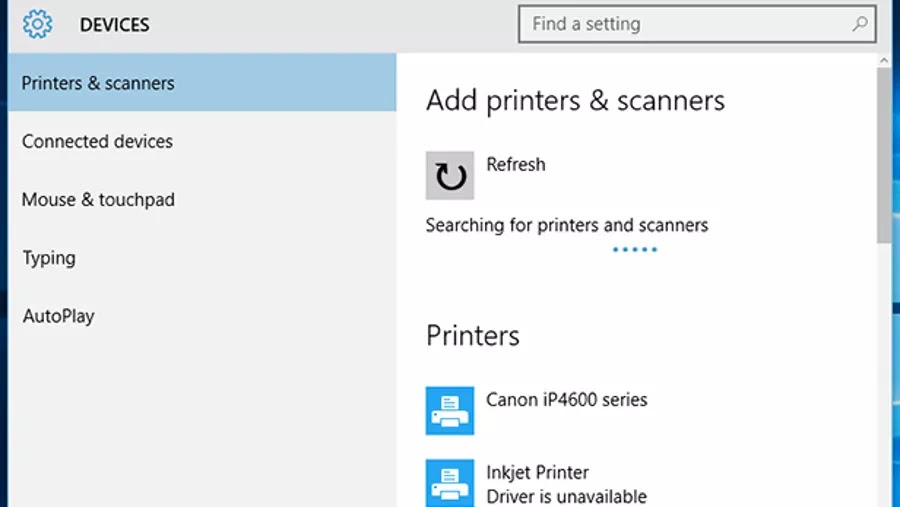
If you have an older device, printer compatibility can turn into a real problem. If you’re upgrading from Windows 7 (or earlier) to Windows 10, you need to update all available printer drives, which will prevent them from not working post-upgrade.

Luckily, this couldn’t be easier. Just search for the name of your printer in the search engine of your choice, and download the latest Windows 10 compatible drivers – make sure you’re downloading them from the actual manufacturers website, though. Follow the manufacturer's instructions to install them, and you’re good to go.

3. Grappling with the touchscreen :


Microsoft ships Windows 10 Problems with Edge, the successor to its Internet Explorer browser (although IE is still present in the OS). For many people, however, using Chrome or Firefox is the norm, no matter what Microsoft wants.

To install Chrome or Firefox – and get back to normality – open Edge, search for either, and find a Windows 10 version. Download it, install it, and make sure it's set as the default browser option so that Edge doesn't keep reappearing. To do this, head to Settings, System, and click on Default Apps – click under Web Browser and you can then select your preferred default browser.

4. Finding Safe Mode :


Safe Mode is just what you'd expect – a safe way of booting up a PC and running the system with no startup apps and only essential drivers, which should hopefully allow the computer to boot successfully when it won't otherwise due to some issue or other.

5. Making sure Windows 10 knows where you are :


Location-based apps are fairly prominent in Windows 10 which makes it a good idea to let your PC know (roughly) where you are. Cortana, for example, can give far more information if it can accurately pinpoint where in the world it's being used.

To update your computer's location settings, head to the Start menu, click Settings, Time & Language, and click Region & Language – then make sure the correct country is selected. To turn on Location services, go to Settings > Privacy > Location, and flick the Location switch on.

Call  +1-856-514-8666 for more help and support.


Thursday, 10 December 2020

Windows 10 problems and how to fix them?

 1. Having enough space to install Windows 10 :


If you're planning to move to Windows 10, actually installing the OS is the first area you could potentially run into problems with. Installing a new operating system requires a certain amount of free space on your drive so that it can be downloaded and certain elements can be run successfully.

For Windows 10, the space requirement is 16GB, which should be kept free on the main system drive the computer uses. This is actually the same as previous versions of Windows, so if you've upgraded before you can most likely do it again.

If you want to check how much space is left on your PC, go to My Computer (or This PC, depending on which version of Windows you’re running) where any drives you have will be listed. You can see the remaining space indicated beneath each drive, or you can right click and select Properties for a better overview (your system drive is usually C:)

2. Checking you have a powerful enough PC :

Just as with space requirements, your PC will also have to be capable of running Windows 10. This means that it must reach certain minimum system requirements.

The requirements for running Windows 10 are relatively low: A processor of 1GHz or faster; 1GB (32-bit) or 2GB (64-bit) of RAM; 16GB of free drive space; Microsoft DirectX 9 graphic device; and a Microsoft account combined with internet access.

To find out your PC's spec, go to Control Panel and select System and Security, then System.

However, keep in mind that these are the minimum requirements, and you should shoot for higher specs to have a smooth and enjoyable experience. 

3. Activating Windows 10 :


Some users have reported issues with activating their copies of Windows 10, which could have been down to a number of different reasons. In some cases, the easiest way to get around the problem is to purchase a legitimate copy of Windows 10.

Unlike previous versions of Windows, the latest one is almost exclusively available online, which means that official Microsoft websites are the best bet for your purchase. The company was giving the OS away for free, but that promotion ended quite a while ago.

Microsoft has a helpful website that provides a downloadable copy in either 32-bit or 64-bit versions.

If you do find that you're unable to activate Windows 10 successfully, handily Microsoft introduced a new activation troubleshooter feature way back in the Anniversary Update. You'll find this in Settings, then click Update & Security, go to Activation and select Troubleshoot (you won't see this option if the OS has been activated).

4. Avoiding inconvenient software update reboots :


Windows 10 Problems are, in many ways, a truly internet-based operating system. Mostly, this is a bonus but there are times when it isn't – and Microsoft's attitude towards operating system updates is one such time.

The most annoying part of automatic updates is the restarting, which can seemingly come at random (and inconvenient times). The simplest way to counteract this is to head to Windows Update (in Settings > Update & Security), click on Advanced Options and then Notify to Schedule Restart, which means the OS will request a reboot instead of interrupting everything you’re working on.

5. Updating old software to work with Windows 10 :

Each version of a new operating system comes with its own set of backwards compatibility issues and Windows 10 is no exception.

The transition from Windows 8.1 to 10 is far less jarring than the move from Windows 7 to 8 was, but there are still certain applications that can become broken and, in some cases, cease to work at all.

If a program isn't working with Windows 10, try looking in the Windows Store for an update and, if that doesn't work, delete and reinstall it.

Now that Windows 10 has been out for a few years, most programs should be compatible with the operating system. If they aren't, then they likely never will be.

Consider moving to a newer version of the software, or if it's stopped being developed, it may be time to look for alternatives.

Call  +1-856-514-8666 for more help and support.  

Monday, 12 October 2020

Carrier Billing - Microsoft's standard way to pay worldwide

Carrier billing is coming to all Windows 10 devices including PC’s, tablets and smartphones

  • Purchase uplift from carrier billing far exceeds Microsoft’s prediction of 8x
  • Mobile operators will effectively become the payment processors for Microsoft’s massive, established software markets
  • The opportunity for mobile operators is unprecedented

Reality of adding carrier billing

At the Build 2015 conference in San Francisco last week, Microsoft made a number of game-changing announcements that for many may have gone unnoticed.

First they announced that carrier billing is coming to all Windows 10 devices, in recognition of its unique power to reach millions of people and enable simple payments worldwide. Importantly, this includes all non-mobile connected PC’s and tablets in addition to smartphones, all part of their Universal Windows Platform. Microsoft claim that “carrier billing will result in an 8x increase in purchases”, but just how accurate or realistic is that number and what does this mean for mobile operators?

Also of importance is the introduction of subscription payments, which will build longer term customer engagements and deliver significant ongoing growth in value. Crucially it will also allow the latest subscription products, like Microsoft Office 365, to be sold online with carrier billing.

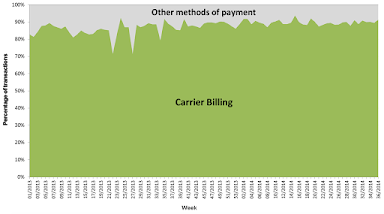
Microsoft claims a primary focus for carrier billing is to grow purchases in countries where credit cards are not common. We notes that over 90% of app store purchases already come from Direct Carrier Billing in countries like Indonesia. This can result in sales far exceeding Microsoft’s prediction of 8x. we typically sees between a 20x and 200x increase depending on the store and market.


Call  +1-856-514-8666 to know more about carriers billing and Account Microsoft 365 Billing.

Friday, 9 October 2020

Billing settings for monthly invoice accounts

 As a monthly invoice customer, you can control several aspects of your billing documents, from how they're created to how they're distributed. First, you can enable two global settings that apply to all invoices. Then, you can specify additional settings for invoices grouped by SAP ID, the unique billing number that is assigned to you when you set up monthly invoice billing.

Global settings

  • Consolidated billing. If you have multiple monthly invoice accounts, you can combine invoices that share the same Microsoft Advertising manager account number, currency, language, and SAP ID. You'll get a single invoice with a high-level, account-by-account breakdown of costs rather than a separate invoice for each account. (All billing details will remain accessible in Microsoft Advertising.) At this time, you only have the options to consolidate all monthly invoice bills or none.
  • Campaign details. You receive a breakdown of costs per campaign with your monthly invoice.

Consolidate your monthly bills :

If you choose to consolidate your invoices, it's all or none. At this time, you can't pick and choose which invoices you can consolidate into one document.

  1. Click Tools from the global menu, and then click Billing & Payments.
  2. If you have multiple accounts, choose one from the account selector in the global menu at the top of the page.
  3. Click Billing settings from the main menu.
  4. Next to Consolidated billing, check the box to Combine similar bills into a single monthly invoice.
  5. Click Save when you're done.

Your consolidated bill will arrive in your next  Account Microsoft Billing period.

Include campaign details with your monthly invoice :

  1. Click Tools from the global menu, and then click Billing & Payments.
  2. If you have multiple accounts, choose one from the account selector in the global menu at the top of the page.
  3. Click Billing Settings from the main menu.
  4. Check Campaign details, and click Save when you're done.
Call  +1-856-514-8666 for more help and support.

Thursday, 24 September 2020

How to contact Microsoft Billing?

 As you can see, Billing Statement or Invoice Template Microsoft Word Hospital Examd Application has some parts that you need to include when you write the letter.

First of all, you need to write down your information such as your full name and your address. And then, you need to mention the recipient’s name. It is important that you write down the specific official or person in charge. For the next, you need also to write down the recipient’s address.

The second part is the body which is the main part of the letter. Here, you can write down the reference or the subject of the letter. After that, you can mention dear contact person. At the first paragraph, you can start stating your acknowledgement with other details. They can be the service, product, relevant issues, and other else. After that, you need to continue with the second paragraph. It consists relevant specific points which clarify your objective. Yes, you need to also confirm the product receipt and the service. Here, you can thank the addressee for delivering the items or information. Well, you need to write down the date as well as the request of a feedback about the experience. You can make it go further by providing good communication and survey.

For the last part, you can write a subscription. Mostly, it is okay to write down that you are thanking the addressee. In order to make it formal, you can add your signature at the bottom left part. Don’t forget! You need to write down your first and last name after the signature.

Call  +1-856-514-8666 for help and support of  Microsoft Billing.

Sunday, 23 August 2020

Microsoft Office 365 lifetime auto-renewal features

 Microsoft says that a new user activity-based expiration policy can be enabled for Office 365 groups by select Azure AD Premium customers starting today allowing for automated lifetime renewals without any user intervention.

Office 365 is part of the Microsoft 365 software bundle which also comes with Windows 10 and EMS (short for Enterprise Mobility + Security), a bundle which in Microsoft's vision provides customers with the easiest way of enjoying an easy to manage and secure online productivity platform.

Office 365 groups are the main collaboration method for Microsoft 365 customers, making it possible for users to communicate with their teammates while using various Microsoft apps such as Outlook, Teams, Yammer, and SharePoint.

New O365 group expiration policy in private preview

Select Azure AD Premium customers will be able to enable the new Office 365 groups expiration policy starting today, allowing active groups to avoid being deleted automatically after the group lifetime is reached, as Office 365.

The new activity-based Office 365 groups expiration policy will allow organizations to improve their groups' life cycle management by keeping a balance between making sure that useful groups where employees are actively sharing are not haphazardly removed and deleting the ones no one uses anymore.

While the current group expiration policy will alert admins to remove or renew  microsoft Office 365 groups for which the expiration time frame has been reached, after enabling the new policy "groups which are being actively used will be automatically renewed."

The activity-based group auto-renewal behavior is based on user activity from Outlook, SharePoint, Teams, Yammer, and other Office 365 groups.

Call  +1-856-514-8666 for help and support.

How to fix update and security crashing in Windows 10?

1. Check If There Are Any Corrupt Files Which Are Causing This Issue Corrupt files looming in your PC or laptop could be a reason why update...